Skip to content


Skin can look calm one week and suddenly sting when you apply a familiar cleanser or moisturizer. It may feel tight after washing, develop rough patches, or react to products that once felt comfortable.
At Weigh To Be Medical Weight Loss and Aesthetics in Grand Blanc, we often look at these changes through one practical lens: how well the skin barrier is doing its job. Medical-Grade Skincare Products can support that barrier, but the first step is understanding what may be interfering with it.
How can I tell if my skin barrier is damaged and what can help it recover?
A damaged skin barrier may cause stinging, tightness, flaking, redness, or unusual sensitivity. Recovery often involves simplifying skincare, restoring moisture, using daily sunscreen, and letting the skin calm down. Professional assessment can identify irritating products and determine when gentle treatments that support hydration and skin comfort may be appropriate.
What the Skin Barrier Is and What It Does
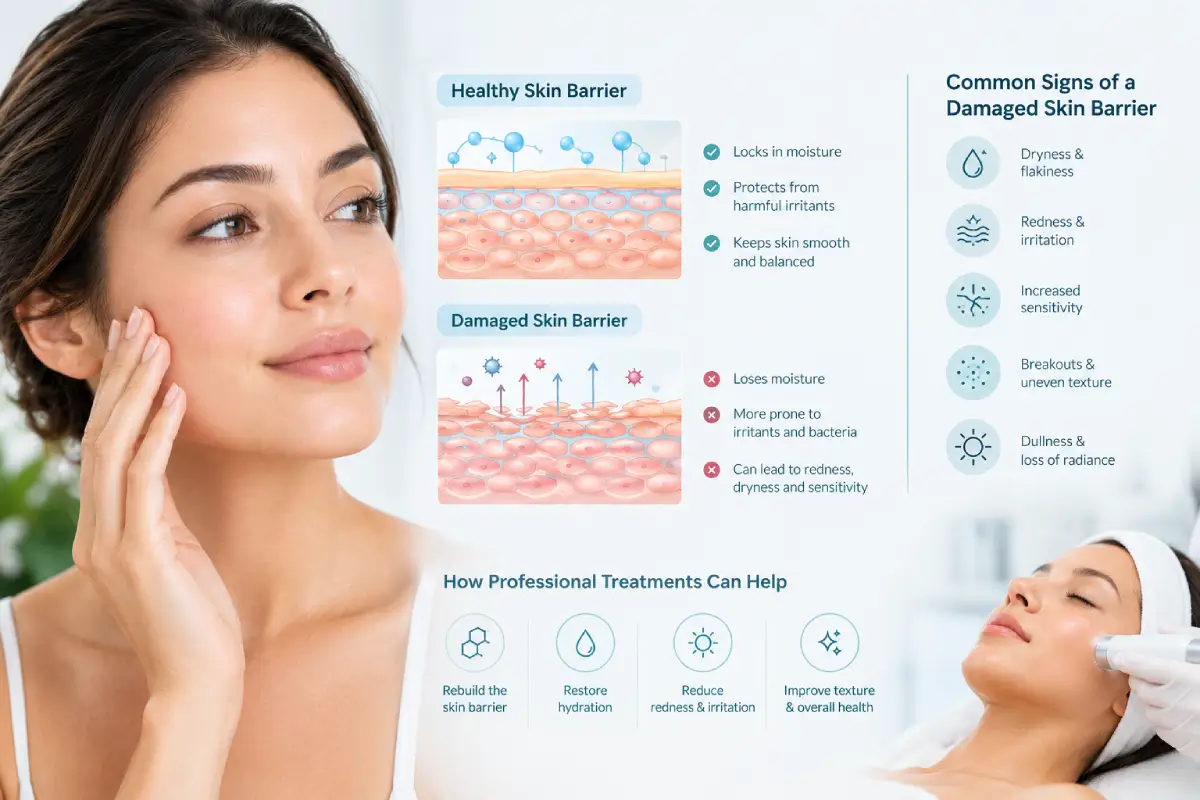
The skin barrier is the outermost protective layer of your skin. Its medical name is the stratum corneum, but its role is simple: it helps keep needed moisture in while limiting irritants and unwanted microorganisms.
A useful comparison is a brick wall. Mature skin cells act like bricks, while lipids, including ceramides, cholesterol, and fatty acids, act like mortar. Together, they help the surface hold water and tolerate everyday exposure.
When that structure becomes disrupted, water can escape more quickly. Ingredients, weather changes, or friction that normally cause little trouble may also start to feel irritating. This is why skin barrier repair focuses on helping the outer layer function normally again rather than simply covering dryness.
What Weakens a Healthy Skin Barrier
Barrier trouble often develops when skin is exposed to more irritation than it can comfortably handle. Using exfoliating acids, retinol, acne products, and scrubs in the same routine can cause this.
Over-exfoliation may remove too much of the surface material that helps skin retain moisture. Harsh cleansers, very hot showers, and frequent scrubbing can add to the problem.
Grand Blanc weather is another factor. Michigan winters combine cold outdoor air with indoor heat, which can contribute to dryness. Summer humidity changes the environment again, so skincare needs may shift with the season.
Age, stress, and sleep can also influence moisture balance and lipid production, although the effect varies by person.
Signs Your Skin Barrier Is Damaged
One of the clearest clues is a change in tolerance. A familiar product suddenly burns, tingles, or stings. Other signs may include:
- Stinging after skincare: Cleansers, moisturizers, or serums create a new warm or sharp sensation.
- Tightness after washing: Skin feels stretched within minutes of cleansing.
- Flaking with oiliness: Rough patches appear even when parts of the face still look shiny.
- New redness or reactivity: Skin flushes more easily or reacts strongly to weather, products, or friction.
- Small unfamiliar breakouts: Irritated skin develops bumps unlike your usual acne.
A damaged skin barrier does not always look severe. Skin may appear fairly normal while feeling itchy, tight, rough, or unusually sensitive.
What Home Care Can and Cannot Do on Its Own
Many mild barrier problems improve when you simplify your routine. Pausing strong actives, avoiding scrubs, using a gentle cleanser, applying a barrier-supporting moisturizer, and wearing daily sunscreen can reduce avoidable irritation.
Our Medical-Grade Skincare Products in Grand Blanc, MI include options for cleansing, moisturizing, hydration, antioxidant support, sunscreen, and skin renewal. During recovery, the goal is not to use more products. Instead, use what the skin can comfortably tolerate.
The harder part is deciding what to pause, for how long, and when to add active ingredients back. If you are unsure what may be contributing to irritation, you can contact our Grand Blanc team for guidance. A professional assessment can help identify patterns that may be affecting your skin.
Persistent redness, itching, scaling, or recurring patches can also signal eczema, rosacea, or another skin condition. A dermatologist can best evaluate those concerns.
How Professional Treatments Support Barrier Recovery
A thoughtful skin barrier treatment plan starts with assessing the skin before recommending a procedure. We assess how the skin looks and feels, ask what has been applied to it, and consider what may be contributing to the reaction.
For skin that is ready for in-office care, gentle options may support hydration and comfort. Weigh To Be offers HydraFacial® treatments and red light therapy, which may be considered depending on skin condition and goals.
Timing matters as much as treatment choice. RF microneedling and laser treatments deliberately create controlled skin disruption to support renewal. If the barrier is already irritated or compromised, adding another source of stress may not be appropriate yet.
Letting the skin settle first may improve comfort and help a provider decide when to resume stronger treatments or active skincare. Results and tolerance vary.
Common Questions About Skin Barrier Damage
How Long Does It Take for a Damaged Skin Barrier to Recover?
Mild irritation may improve within days to a few weeks, while more significant disruption can take longer.
Can You Have Oily Skin and a Damaged Barrier at the Same Time?
Yes. Oily skin can still lose water and become tight, flaky, irritated, or reactive.
Is a Damaged Skin Barrier the Same Thing as Sensitive Skin?
No. Sensitive skin can be an ongoing tendency, while barrier damage may be temporary and linked to products or environmental stress.
Should I Stop Using Retinol Completely?
A temporary pause may be appropriate if retinol causes stinging, peeling, or redness. A provider can help determine when to reintroduce it.
Medical-Grade Skincare Products and Your Next Step for Barrier Recovery
A healthy skin barrier helps hold moisture in and limit unnecessary exposure to irritants. When that barrier is disrupted, stinging, tightness, flaking, redness, and unexpected sensitivity can follow. Simplifying the routine and giving the skin time to recover are often reasonable first steps.
Medical-Grade Skincare Products can be part of that plan, but product choice should match what the skin can tolerate now. If reactions keep returning or you are unsure what to stop, a professional evaluation can help clarify the next step.
At Weigh To Be, we can review your current skincare routine, assess how your skin is responding, and discuss appropriate home care or in-office options. Want Smoother, Firmer-Looking Skin? Schedule a consultation at Weigh To Be in Grand Blanc.